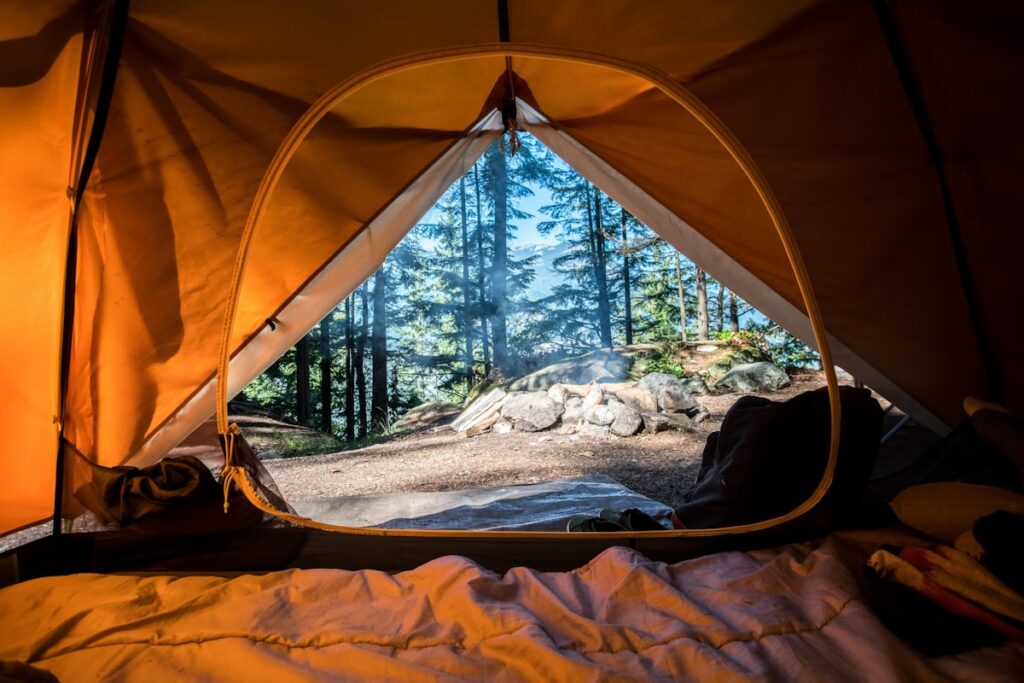
One of My Favorite Things About Living in the Springs Is That I Can Be Camping on a Mountain Ridge 30 Minutes After Leaving My House
I’ve lived in Colorado Springs for over twenty years. I worked for Delta Airlines, traveled to just about every major city in the country, and chose this place on purpose. One of the biggest reasons? Access. You can leave your driveway, head west, and in half an hour you’re sitting in a camp chair on a mountain ridge looking down at the entire Front Range spread out below you like a relief map.
That’s Rampart Range Road.
Most people who visit Colorado Springs — and honestly, a lot of people who live here — have never heard of it. They know Garden of the Gods, they know Pikes Peak, and those are incredible. But Rampart Range Road is the kind of place locals keep to themselves. It’s where you go when you want to feel like you’re genuinely in the backcountry without driving two hours to get there.
I camp up there regularly, and I want to walk you through everything you need to know — what it is, what to expect, and how to make the most of it.
What Is Rampart Range Road?
Rampart Range Road is a forest service road — Forest Road 300, if you want to get technical — that runs along the top of the Rampart Range, which is the first major ridge west of Colorado Springs. It connects the Woodland Park area to the north with the Garden of the Gods area to the south, running roughly north-south along the ridgeline for about 20 miles.
It’s a dirt road. Not paved, not gravel in most places — actual dirt and packed earth with some rocky sections. It winds through Pike National Forest at elevations between about 8,000 and 9,500 feet, which means you’re up above the city, in the ponderosa pines and aspens, with the kind of air that smells like pine needles and campfire smoke and nothing else.
The road has been around forever. It was originally built as a fire access road, and the Forest Service maintains it to varying degrees depending on the section and the season. There are numbered pull-offs and dispersed camping areas scattered along the entire length, and several side roads that branch off to trailheads and additional camping spots.
If you’re on the west side of Colorado Springs like I am, you can access it from Garden of the Gods or from Highway 24 near Woodland Park. Either way, you’re on the ridge in no time.
The Views
Here’s what makes Rampart Range Road special: the views are absolutely panoramic. I’ve been all over this country, and I’ll stack these views against anything I’ve seen.
Because you’re driving along the actual ridgeline, you get openings in the trees where you can look east and see the entire Front Range stretched out below you. Colorado Springs, the Air Force Academy, the plains rolling off into Kansas — it’s all right there. On a clear day you can see 50, 60, maybe 70 miles out. The city looks tiny. You can pick out landmarks — the Garden of the Gods red rocks, the Olympic Training Center area, the spread of neighborhoods — but they all look like a model train set from up there.
Look west and you’ve got Pikes Peak towering above everything. The perspective is different from up on the Rampart Range — you’re at a similar elevation to the base of Pikes Peak, so you really appreciate just how massive that mountain is when you’re looking at it from the side rather than straight up at it from town.
The best view spots are the ones with natural clearings, usually where the road curves around the east-facing side of the ridge. Some of the numbered pull-offs have been specifically placed at viewpoints, and when you find a good one, you’ll know it. You’ll stop the car, step out, and just stand there for a minute. Even after twenty years, I still do that.
Sunset from up there is something else entirely. The light turns golden, the city starts twinkling below you, and Pikes Peak goes pink and then purple. If you’re camping, that’s your evening entertainment — and it beats anything on a screen.
Camping on Rampart Range Road
This is dispersed camping — which means there’s no campground, no reserved spots, no check-in desk, and no facilities. You pull off the road, find a flat spot that’s already been used as a campsite (look for existing fire rings), and that’s your spot.
There are dozens of dispersed camping areas along the length of the road. Some are right off the main road at numbered pull-offs, and some are down short side roads that lead to more secluded spots. The Forest Service allows dispersed camping throughout Pike National Forest, and Rampart Range Road is one of the most accessible places to do it near Colorado Springs.
Here’s what you need to know:
- No water. There are no spigots, no wells, no water sources. Bring everything you need.
- No restrooms. No pit toilets, no outhouses. Plan accordingly and follow Leave No Trace principles.
- No trash service. Pack it in, pack it out. Everything. If you brought it up the mountain, it goes back down the mountain with you.
- Fire restrictions. Check current fire restrictions before you go — this is critical. During dry summers, the Forest Service often issues fire bans, and they’re enforced. When fires are allowed, use existing fire rings only. Never build a new one, and never leave a fire unattended.
- No reservations needed. Just show up. If a spot is taken, drive a little further and find another one. On weekdays, you’ll have your pick.
- Stay limit. Forest Service rules generally allow up to 14 days of dispersed camping in one spot.
The camping experience up there is about as close to real backcountry camping as you can get without actually backpacking in. You’re surrounded by pine forest, the only sounds are wind in the trees and maybe a Steller’s jay yelling at you, and at night the stars are noticeably better than anything you’ll see from town. You’re only 6,000 feet above the city, but light pollution drops off fast once you’re on the back side of that ridge.
What Makes It Special
The thing I love about camping on Rampart Range Road is the contrast. You wake up, unzip your tent, and you’re looking at pine trees and mountain ridges and maybe a deer walking through your campsite. Then thirty minutes later you can be back in town grabbing coffee. That proximity is rare. Most cities, if you want real wilderness camping, you’re driving two or three hours minimum. Here, it’s right there.
Road Conditions and What to Drive
Let me be straight with you about this: Rampart Range Road is a dirt road, and it varies from “perfectly fine in a Honda Civic” to “I’m glad I have four-wheel drive” depending on the section and the weather.
When it’s dry, most of the road is passable in a regular car. It’s bumpy, it’s slow — you’ll be doing 15 to 25 mph most of the time — but you can make it in a sedan if you’re careful and you pick your line around the rougher spots. I’ve seen plenty of regular cars up there on dry summer days.
After rain, it’s a different story. The road can get rutted and muddy, and some sections turn into a mess. If it’s been raining, I’d strongly recommend a vehicle with some ground clearance — an SUV, a truck, something with all-wheel drive at minimum. Getting stuck on a mountain ridge with no cell service is not how you want to spend your afternoon.
High clearance is recommended. You might get away without it on dry days, but you’ll be happier with it regardless. Some of the side roads that lead to the better camping spots are rougher than the main road.
This road is NOT RV-friendly. I say this as someone who loves RVing — I’ve got an RV and I would never take it up Rampart Range Road. The road is too narrow, too rough, and there are sections where turning around is nearly impossible in anything longer than a full-size truck. If you’re looking for RV-friendly camping near Colorado Springs, there are great options, but this isn’t one of them. This is truck-and-tent territory.
Winter closures: The road is typically closed from late fall through late spring, usually around November through April or May depending on snow conditions. The Forest Service gates the road at both ends. Don’t try to get around the gates — the road is closed for a reason, and you will get stuck.
Enduro Riding — One of My Favorite Things I’ve Ever Done Out Here
I have to mention this because it was one of the best experiences I’ve had in Colorado. I used to have a KTM 690 enduro — a street-legal dual sport motorcycle with a license plate — and riding that bike up through the mountains along Rampart Range Road was something else entirely.
Here’s the thing most people don’t realize: having a street-legal enduro bike means you can ride on any Forest Service road in Pike National Forest. And from Rampart Range Road, you can access hundreds of miles of those roads. I’d ride out to Garden of the Gods, catch Rampart Range Road heading south, and from there just keep going. Mile after mile of forest roads winding through the mountains, past meadows and creeks and ridgelines that most people will never see.
You’ll see things out there that you can’t get to in a car or even on a mountain bike. Elk herds, hidden meadows, old mining roads that dead-end at viewpoints that take your breath away. It’s the kind of riding where you forget about everything else and it’s just you and the mountains.
If you’re into motorcycles and you live in the Springs — or you’re visiting and can rent a dual sport — I highly recommend it. Get an enduro with a plate, head up Rampart Range Road, and just explore. You won’t regret it.
Best Time to Go
Summer and early fall are prime time for Rampart Range Road. June through September is your sweet spot — the road is open, the weather is warm (though it’s always cooler up on the ridge than in town — bring a jacket for evenings), and the days are long enough to enjoy those sunset views.
Weekdays are the secret. On a summer Saturday, you’ll see other campers, OHV riders, mountain bikers, and people just driving the road for fun. It’s not crowded by any stretch — it’s a dirt road in the national forest, not a theme park — but you’ll have company. Go up on a Tuesday or Wednesday and you might not see another soul for hours. That’s when it really feels like wilderness.
Fall colors are amazing. Late September through mid-October, when the aspens turn, Rampart Range Road is one of the best places near Colorado Springs to see the color change. The aspens up at 9,000 feet turn before the ones in town, and driving through groves of gold and orange with Pikes Peak in the background is the kind of thing that makes you glad you live here.
Early mornings are spectacular too. If you camp overnight, the sunrise coming up over the plains to the east while you’re sitting at 9,000 feet with a cup of coffee — that’s a hard experience to beat anywhere in the country.
What to Bring
Whether you’re heading up for a day trip or an overnight, here’s what I’d pack:
Day Trip Essentials
- Plenty of water — at least a gallon per person, more if it’s hot
- Snacks and lunch (no services up there)
- Sunscreen and sunglasses — the UV is intense at 9,000 feet
- A jacket or fleece — it’s always 10 to 15 degrees cooler on the ridge than in town
- Full tank of gas — you won’t find a gas station up there
- Trash bags — pack it in, pack it out
- A good map or downloaded GPS — cell service is spotty to nonexistent
- Basic tools and a spare tire — you’re on a dirt road in the mountains
Overnight Camping Add-Ons
- Tent, sleeping bag, and pad — rated for cooler temps than you’d expect (can drop into the 30s at night even in summer)
- Camp stove and fuel — don’t rely on being able to have a campfire, especially during fire restriction season
- Headlamp or lantern
- Extra water — you’ll use more than you think at altitude
- Firewood (if fires are currently allowed) — don’t cut standing trees
- Bear-aware food storage — this is bear country, so keep food sealed and stored properly
- A good camp chair — you’re going to want to sit and stare at that view for a while
Getting Up There and Getting Back
Rampart Range Road is one of those places that reminds you why you live in Colorado Springs — or why you should. It’s real mountain camping, real wilderness quiet, real panoramic views, and it’s practically in your backyard if you live on the west side of the Springs.
After a night up on the ridge, you can break camp, wind your way back down to town, and be eating breakfast at a restaurant in Manitou Springs within the hour. Or head the other direction and drop into Woodland Park for coffee. Or keep exploring — there are trails, side roads, and spots to discover that I’m still finding after twenty years.
If you’re looking for more west-side adventures, check out my guides to Garden of the Gods and Ute Valley Park, or browse some of the best day trips from Colorado Springs. This whole side of town is built for getting outside, and Rampart Range Road is one of the best-kept secrets up here.
Just remember: pack it in, pack it out, respect the fire restrictions, and leave it better than you found it. That’s how we keep places like this available for everyone.
About the Author: Dominic Ferrara has lived in Colorado Springs for over 20 years. After working for Delta Airlines and visiting just about every major city in the United States, he chose Colorado Springs for its scenery, sunshine, and outdoor lifestyle. He lives on the west side near Ute Valley Park, where he e-bikes, camps, and explores the mountains regularly. His recommendations come from two decades of eating, hiking, and living here — not from a weekend visit.
