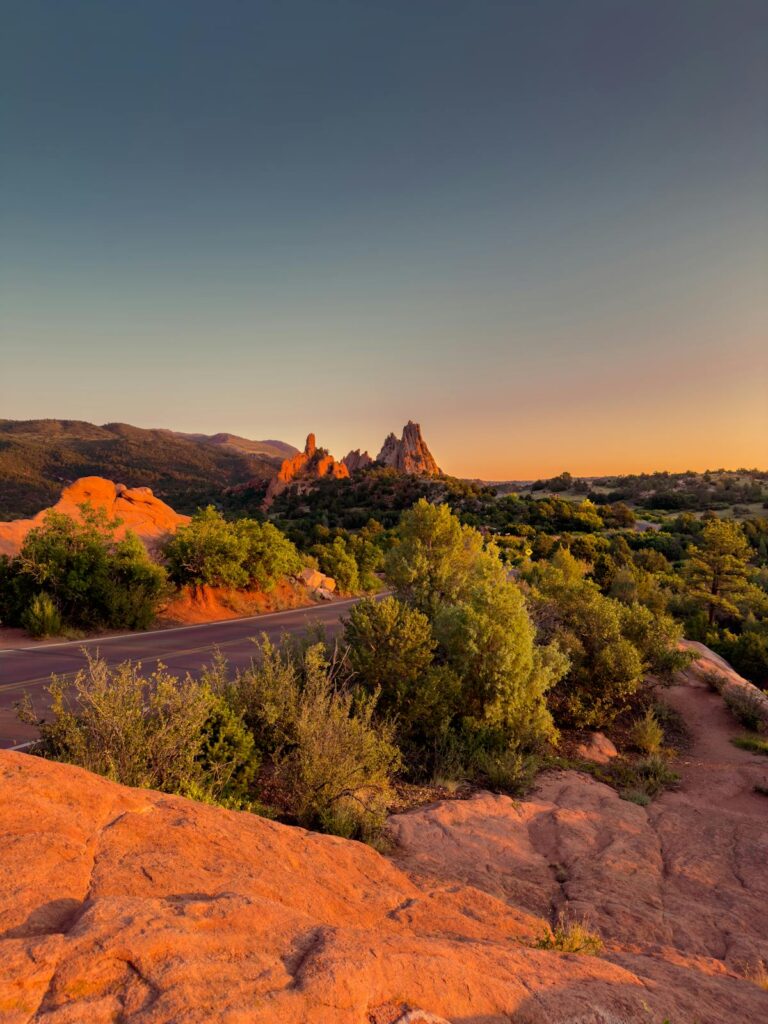
I’ve Been Looking at These Mountains for 20 Years and I Still Stop and Stare Sometimes
I live on the west side of Colorado Springs, right near Ute Valley Park, at about 6,035 feet elevation. Pikes Peak is basically in my backyard. I see it every single day — pulling out of my driveway, riding my e-bike on the trails, looking out my kitchen window. And after more than 20 years here, I still catch myself stopping to take it in.
That’s the thing about the views in Colorado Springs. They don’t get old. The light is always different. The clouds are always doing something new. And there are spots in this city — some well-known, some that most people walk right past — where you can stand and see 50 to 100 miles in every direction.
This isn’t a list I pulled off TripAdvisor. These are places I actually go. Places I ride my e-bike through, hike to on weekends, or pull over at on my way home from work because the light is doing something ridiculous. If you want the best views in Colorado Springs, here’s where a local actually looks.
1. Garden of the Gods — But Not When You Think
Yeah, I’m putting Garden of the Gods first. You already knew it was going to be here. But here’s what most visitors get wrong: they show up at noon on a Saturday, fight for parking for 20 minutes, and then take photos of red rocks washed out by harsh overhead sun. The place looks flat and crowded and they wonder what the big deal is.
The big deal is sunrise. Show up at 6:30 in the morning — earlier in summer — and the rocks glow. I mean genuinely glow, like they’re lit from inside. The red sandstone catches that low-angle golden light and it’s one of the most stunning things you’ll ever see. Pikes Peak sits right behind the formations with alpenglow on the summit. There are maybe five other people in the entire park.
My favorite spot is the Central Garden Trail area between North Gateway Rock and the Kissing Camels. At sunrise, the shadows are long, the contrast is dramatic, and you can get compositions that don’t look like everyone else’s Instagram post. The Siamese Twins viewpoint is also worth the short walk — you can frame Pikes Peak through the rock window.
Local tip: The fall and winter months are actually better for photos than summer. Lower sun angle all day, fewer crowds, and the occasional dusting of snow on the red rocks is unbeatable.
2. Ute Valley Park Overlooks — My Home Park
This is where I spend most of my outdoor time. Ute Valley Park is on the west side of town, and most people in Colorado Springs have never been here. Tourists definitely haven’t. It’s a network of trails through rocky outcrops, ponderosa pines, and open meadows — and it has some of the best casual viewpoints in the city.
The park sits at an elevation that gives you wide views of the Front Range to the west and the city stretching out to the east. There’s no single “official” overlook — you just wander the trails and keep stumbling onto ridgelines where the whole world opens up. The rock formations along the western ridge are my favorite. You get unobstructed views of Pikes Peak and the surrounding mountains, and on a clear day you can see north past the Air Force Academy.
What I love about Ute Valley is that it’s never crowded. I’ve been out there hundreds of times and I can count on one hand the number of times I’ve had to wait for someone to move out of a view. It’s a locals’ park through and through. If you want Colorado Springs views without the Colorado Springs crowds, this is your spot.
3. Palmer Park — Yucca Flats Viewpoint
Palmer Park is on the east side of town, which means most west-siders like me don’t think about it enough. That’s a mistake. The Yucca Flats area at the top of the mesa gives you a completely different perspective on Colorado Springs — you’re looking west across the entire city at the mountain backdrop.
From up there, you get a true panoramic view. Pikes Peak centered, Cheyenne Mountain to the south, the Air Force Academy to the north, and the entire urban footprint of the city laid out below you. It’s especially striking at sunset when the mountains go purple and the city lights start flickering on.
The drive up to the top is on a paved road, so you don’t need to hike if you don’t want to. But there are trails along the mesa rim that give you different angles and a little more solitude. The rock formations up there are interesting too — similar sandstone to Garden of the Gods, just without the tourist infrastructure.
4. Stratton Open Space — Cheyenne Mountain Views
Stratton Open Space sits at the base of Cheyenne Mountain on the southwest side of town. It’s one of those places that’s popular enough with locals but still flies under the radar for visitors. The trails wind through scrub oak and pine forest and climb up toward the flanks of Cheyenne Mountain itself.
The views here are different from most other spots because you’re looking at Cheyenne Mountain up close — the same mountain that houses NORAD inside it. The Ridgeline Open Space connector trail gives you elevated views of the Broadmoor area, the city to the north, and the mountain looming above you. It feels wild even though you’re five minutes from a subdivision.
In fall, the scrub oak turns orange and gold and the whole mountainside lights up. Combine that with a blue Colorado sky and it’s about as photogenic as it gets without driving into the mountains.
5. The Incline Summit and Barr Trail — You Earn This One
The Manitou Incline is basically a staircase bolted to the side of a mountain. Nearly 2,800 steps, gaining about 2,000 feet of elevation in less than a mile. It’s brutal. I’m not going to sugarcoat it — my legs have been shaking at the top more than once.
But the view from the summit is earned, and that makes it different. You’re standing at about 8,590 feet looking straight down at Manitou Springs, across the city, and out to the eastern plains. On a clear day you can see the curve of the earth out there. The sense of accomplishment combined with that panorama is something you don’t get from a pulloff on the road.
If the Incline is too much — and there’s no shame in that — the Barr Trail switchbacks above Manitou Springs give you similar views with a gentler grade. You don’t have to hike all the way to Barr Camp. Just 30 to 45 minutes up Barr Trail puts you above the treeline breaks with excellent views. It’s one of the best hikes in Colorado Springs for a reason.
6. Red Rock Canyon Open Space — The Less Crowded Garden of the Gods
Red Rock Canyon is about a mile south of Garden of the Gods, and it has similar red rock formations without the tour buses and souvenir shops. I tell every visitor the same thing: go to Garden of the Gods for sunrise, then come here for the rest of the day.
The Contemplative Trail climbs up to a hogback ridge that gives you views of the red rock formations below, Pikes Peak above, and the city to the east. It’s one of my favorite quick viewpoints in the entire city — maybe a 15-minute walk from the parking lot and you’re standing on a ridge with 270-degree views.
The canyon itself is gorgeous for photography too. The red walls catch light beautifully in the morning and late afternoon, and the quarry area has an almost otherworldly look to it. If you’re a photographer visiting Colorado Springs, Red Rock Canyon should be on your list right after Garden of the Gods.
7. Rampart Range Road Pulloffs — Mountain Panoramas
This is one of my favorite drives in the area and most tourists have no idea it exists. Rampart Range Road is a dirt road that runs along the top of the Rampart Range south and west of town. You access it from Garden of the Gods Road heading west, or from the Woodland Park side.
Once you’re up on the ridge, there are pulloffs every quarter mile or so with views that’ll make you pull over whether you planned to or not. You’re up above 9,000 feet in places, looking down at Colorado Springs, out across the plains, and across to Pikes Peak from a completely different angle than you’re used to.
The road is passable in a regular car when it’s dry, but I’d recommend something with clearance after rain. It’s a seasonal road — typically open late May through October, depending on snow. The best pulloffs are in the first five to seven miles from the east entrance. Bring a camp chair and a thermos and just sit there for a while. Nobody’s rushing you.
Local tip: The wildflowers along Rampart Range Road in July are incredible. Fields of yellow and purple stretching out below the views. It’s peak Colorado.
8. Gold Camp Road — Historic Route with Views
Gold Camp Road is an old railroad grade that runs from the west side of town up toward Victor and Cripple Creek. The lower section — from 26th Street up past the tunnels — is paved and easy to drive. It winds through North Cheyenne Canyon and gives you views down into the canyon and out over the city.
The tunnels section is the most famous part. You drive through old railroad tunnels carved into the rock, and between them you get dramatic canyon views framed by rock walls. Tunnel #3 has been closed for years, but tunnels 1 and 2 are still open and the views between them are worth the drive alone.
Above the tunnels, the road turns to dirt and climbs up toward the old mining districts. The views get bigger and wilder the higher you go — eventually you’re looking down at the entire city from the backside of the mountains. It’s a completely different perspective than anything you get from the city itself.
9. High Drive — Cheyenne Canyon Views
High Drive is a narrow, winding one-way road that cuts along the side of the canyon above North Cheyenne Canyon Park. It’s one of those roads that makes passengers grip the door handle, but the views are outstanding.
You’re perched on the side of the canyon with the creek far below and Cheyenne Mountain rising above you. There are several pulloffs where you can stop and look down into the canyon or out over the city. The combination of the dramatic terrain and the forest canopy makes it feel like you’re deep in the mountains, not ten minutes from a Starbucks.
The road connects North Cheyenne Canyon Park to Gold Camp Road, so you can make a loop out of it. Drive up through the canyon, take High Drive across, drop down Gold Camp Road, and you’ve just done one of the best scenic drives in the city in about an hour.
10. Pulpit Rock Park — Quick City Overlook
Pulpit Rock isn’t going to win any awards for wilderness solitude. It’s right in the middle of town, surrounded by neighborhoods. But it’s one of the best quick viewpoints in Colorado Springs, and it’s perfect if you’ve got 20 minutes and want a view.
The rock formation itself sits at the top of a short trail — maybe 10 minutes of walking. From the top, you get a solid 360-degree view of the city, the mountains to the west, and the plains to the east. It’s a great spot for sunset photos because you can see both the mountains catching the last light and the city starting to glow.
I wouldn’t make a special trip from out of town just for Pulpit Rock, but if you’re staying on the north side of town and want a quick viewpoint fix, it delivers. Locals use it for morning coffee overlooks and evening wind-down walks. It’s one of those everyday-life view spots that makes living here feel like a constant vacation.
Best Time of Day for Views in Colorado Springs
If you’re serious about seeing — or photographing — the best views Colorado Springs has to offer, timing matters more than location. Here’s what 20 years of watching these mountains has taught me:
- Sunrise (golden hour): The best light in Colorado Springs hits the red rocks and the Front Range from the east. Everything glows. Garden of the Gods, Red Rock Canyon, and any east-facing viewpoint are magical at sunrise. Show up 15 minutes before and stay 30 minutes after.
- Sunset (golden hour): West-facing viewpoints like Palmer Park, Pulpit Rock, and the eastern pulloffs on Rampart Range Road catch incredible evening light. The mountains go through purple, pink, and orange in about 20 minutes.
- Monsoon season (July-August): This is the secret weapon. Summer afternoon thunderstorms build dramatic cloud formations, and when they clear at sunset, the sky goes absolutely insane. I’ve seen skies over Pikes Peak that look like paintings. If you’re visiting in late July or August, grab a west-facing viewpoint around 7 PM and just wait.
- After a storm: The air clears out, visibility jumps to 100+ miles, and if there’s fresh snow on Pikes Peak, every viewpoint in the city becomes postcard-worthy.
- Worst time: Noon to 2 PM, especially in summer. The light is flat, the haze builds up, and everything looks washed out. Don’t waste your best viewpoints on midday light.
Photo Tips from a Local
I’m not a professional photographer, but I’ve taken a lot of photos from these spots over the years. Here’s what I’ve learned the hard way:
- Use your phone’s panorama mode at the wide overlooks. Ute Valley, Palmer Park, and Rampart Range Road practically demand panoramas — single frames can’t capture the scale.
- Include foreground elements. A photo of mountains in the distance is nice. A photo of mountains framed by red rocks, wildflowers, or a twisted pine tree is way better. Look for something interesting in the first 20 feet in front of you.
- Bring a lens cloth. At 6,000+ feet, the sun is intense and dust is constant. A smudged lens will ruin golden hour shots faster than bad composition.
- Check the air quality. Wildfire smoke from western fires can kill visibility in summer. If the AQI is above 100, save your viewpoint visits for another day — you’ll just get hazy, flat photos.
- Don’t forget to look east. Everyone points their camera at the mountains. But sunrise light hitting the plains from Palmer Park or Pulpit Rock, with the city in between, is an underrated shot that most visitors miss entirely.
Go See for Yourself
There are a hundred more viewpoints I could list — the top of Section 16, the overlook on the Intemann Trail, random pulloffs on Highway 24 heading into the mountains. Colorado Springs is built on a tilted slab of land between the plains and the Rockies, and that means views are baked into the geography. You almost can’t avoid them.
But the spots I’ve listed here are the ones I keep going back to after 20 years. They’re the places where I still stop, look around, and think — yeah, this is why I live here. Whether you’re a visitor with a camera or a local who’s gotten so used to the mountains that you’ve stopped noticing them, get out to one of these spots at the right time of day. I promise you’ll remember why Colorado Springs is one of the most beautiful cities in the country.
About the Author: Dominic Ferrara has lived in Colorado Springs for over 20 years. After working for Delta Airlines and visiting just about every major city in the United States, he chose Colorado Springs for its scenery, sunshine, and outdoor lifestyle. He lives on the west side near Ute Valley Park, where he e-bikes, camps, and explores the mountains regularly. His recommendations come from two decades of eating, hiking, and living here — not from a weekend visit.
